48,528 Words of Blood, Cypress, and the Sweet Relief of the Short Story Cycle

This post is going to be a long one. Not just because I have a lot of emotion and reflection to unpack, but because I have a math problem to solve. I signed up for ProWritingAid’s NovNov (Novel November) challenge with a goal of hitting 50,000 words. My short story cycle, The Knights of Maenara Collective, currently sits at 48,528 words. That leaves me just 1,472 words shy of my goal, and I intend to make a significant dent in that deficit right here, right now, by pouring every ounce of effort and insight that went into these stories onto this page. This post is a demonstration of how much effort went into every word, every paragraph, and every tense decision within the cycle.
This is the story of how I thought I was failing to write a novel, only to discover I was accidentally building something far more satisfying and perfectly suited to my voice: a modern short story cycle.
Part I: The Immediate Joy of the Short Story (The “Ups”)
The first, and most profound, upswing of this entire project was the sheer, unexpected joy of writing short stories. I started with “Homecoming, 1 of 10, Part One”. I felt the immediate, intense satisfaction of completing a single, self-contained narrative arc.
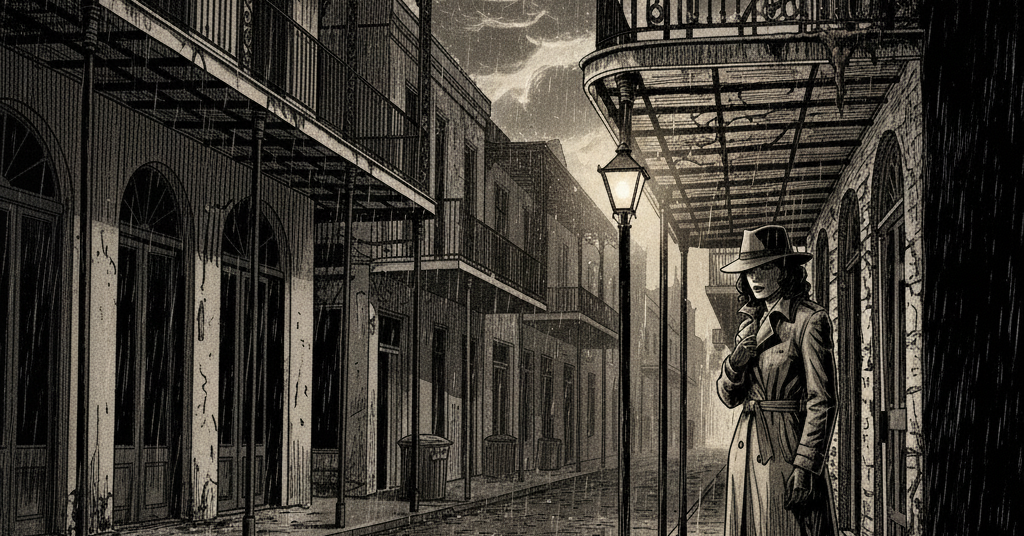
For years, I believed I had to write a sprawling, multi-POV epic. I felt the pressure of a genre that demands thousands of words simply to set up the world. But when I sat down with Detective Nicola Knight, returning to New Orleans like “ghosts do: quiet, uninvited, and carrying unfinished business”, I realized my real passion was in the quick, brutal, focused punch of the short story.
Each story within the cycle has its own emotional engine. For instance, the opening story focuses tightly on Nic’s relationship with her best friend, Delphine Guidry, and the mechanical, deeply personal act of fixing an old truck. It’s a moment of quiet, practiced rhythm and shared, comfortable history that serves as a necessary anchor before the true chaos begins. The story quickly establishes the tone: the heat, the supernatural undercurrents (“blood is how the house remembers its own”), and the central theme of trauma and grief related to her deceased wife, Ellie.
This format allowed me to:
Go Deep, Fast: I could dedicate entire stories to single, intense emotional states… grief over Ellie’s death, the shock of returning to her family home for a new crime scene, or the complexity of her haunted connection to the dead.
Embrace the Episodic Nature of Life: Nic’s previous work of chasing patterns in Georgia (“One turned into thirty-six”) and her sudden call back to New Orleans on a case about “two victims” at her grandparents’ old place is inherently episodic. The short story form mirrored the fractured, case-by-case reality of her life as a detective and a person dealing with ancient family magic.
Celebrate Density: I learned that 5,000 words, when packed with the right details (the smell of overripe magnolias, Del’s French-English cursing, the look of Ellie’s beloved, yet impossible, garden in November), can hold the narrative weight of a chapter twice its size. This is where the effort is concentrated… in making every word pull double duty.
Part II: The Structure Emerges (The “Ups and Downs”)
The biggest “up” in the middle of this process was the moment I stopped fighting the stories and leaned into the concept of the short story cycle. I had been unconsciously writing one all along.
A true short story cycle is not just a collection of stories, but a series of interconnected narratives where individual stories can stand alone, but when read together, create a more complex, unified whole. They share characters, setting, and thematic unity.
For The Knights of Maenara Collective, that unity is clear:
Shared Setting: The oppressive, magical, memory-infused environment of New Orleans, specifically the old Salt Row warehouse and the rural Knight property. The land itself acts as a character, remembering everything.
Character Continuity: The evolving, complicated relationships between Nicola, her fiercely human friend Delphine, and eventually the newly introduced characters like the novelist Grace and the calculating, immortal Queen Victoria. The progression of Nicola’s self-discovery, from just “following ghosts” to understanding the power in her own blood that Victoria finds “active” and “alive”, is the central spine of the entire cycle.
Thematic Unity: All stories wrestle with themes of grief, inherited trauma (the family sigil and scar), the nature of memory (“Blood is how the house remembers its own”), and what it means to choose to stay and fight the things that “should stay shut”.
The “down” was the difficulty in maintaining this balance. Each story had to resolve its own plot while advancing the larger meta-plot. For example, a story might focus on a singular supernatural crime in the farmhouse (two victims, a bite that feels “Fast and sharp like a cat”), but it also has to push forward the tense relationship between Nic and Victoria, which culminates in a shocking confession that changes the dynamic forever.
It was a constant, grueling high-wire act. It required more planning and charting than a single novel might have, because I had to keep track of a dozen separate emotional timelines all converging on one place. Every one of the 48,528 words felt earned through this rigorous, intentional balancing act.
Part II.B: The Grind of Gaps and Geography (Plot Holes and Continuity Traps)
This is the hidden, tedious work that makes a cycle hang together: the post-draft triage of continuity errors. A novel has momentum to carry minor inconsistencies; a cycle, with its hard stops and restarts, exposes every flaw like a harsh spotlight. This is where I spent dozens of hours tracing timelines and physical distances to avoid reader whiplash.
1. The Shifting Ground of New Orleans Geography
My most persistent issue was the physical space between the “rural Knight property” and the “old Salt Row warehouse.” In my head, they were an hour apart. In one draft, I had Delphine and Nic drive from the rural property to the warehouse to meet Queen Victoria, file an insurance claim, and return, all within three pages. That level of compressed, instantaneous travel kills immersion. I had to manually go back and insert a five-hour time-skip, a small note about a nap, and a line of dialogue referencing the frustrating distance. A cycle demands you treat every geographic location… the airport, the Knight house, the warehouse, the streets where Ellie used to walk… as a fixed, measurable point in your universe, otherwise the magic feels unanchored.
2. The Unstable Character Arc of Queen Victoria
The emotional core of the cycle revolves around Nic, Delphine, and Victoria becoming a “volatile, permanent love triangle.” This requires Victoria, an “vampire” who is initially “calculating,” to suddenly pivot to showing “terrifying, fragile hope” and “new, dangerous affection.” This shift is a massive plot issue that had to be justified incrementally across multiple stories. Initially, the pivot was too abrupt in a single story, feeling unearned. I had to retroactively add in moments: a lingering touch, a subtle change in her posture, or a specific, vulnerable line about her past that gave Nic, and the reader, a reason to believe the shift was genuine and not just manipulation. Maintaining the consistency of Victoria’s 1,000-year-old emotional baggage across ten short stories was perhaps the toughest continuity challenge of all.
3. The Mundane vs. The Magical (And the F150)
The cycle established Nic as a meticulous detective whose past work involved tracking patterns (“One turned into thirty-six”) and her present work involves fixing a 1997 Ford F150. The problem arose in balancing the technical details. In Story 1, the truck needed a new alternator. In Story 4, I had Nic reference a brake issue. But wait… did the brake issue get resolved off-page between stories? I had to insert a line in Story 2 about Delphine fixing the brakes during the night, simply to avoid a reader asking, “Wait, why is Nic driving a truck with faulty brakes to a crime scene?” These seemingly minor mechanical details are just as critical as the mythology of the Maenara bloodline. If the truck continuity is broken, the reader loses trust in the grander, magical continuity.
4. The Weight of Grief and Time
Nic’s grief over her wife, Ellie, is the emotional anchor of the entire cycle. While her death is a fixed point… three years ago… her emotional response to it had to evolve naturally across the stories. A common error was having Nic experience the same intensity of paralyzing grief in Story 7 that she did in Story 1. I had to ensure her reactions were subtly muted, shifting from raw shock to weary acceptance, and finally, to using the grief as a source of strength. The time jump between stories had to reflect emotional progress, not just plot movement, otherwise Nic’s development would feel inconsistent and frustrating. The effort to fix these small, often structural, failures is what separates a collection of stories from a tightly-woven, deliberate cycle.
Part III: The Final Push, Future Research, & The Challenge
And here we are: 48,528 words. I set a goal, and despite the inherent difficulties of writing interconnected short fantasy stories with deep mythological and emotional roots, I nearly made it. The fact that the cycle ends with a massive emotional climax and a new, volatile political/personal reality for Nic, Delphine, Grace, and Victoria is a testament to the structure.
But the work isn’t over. To push this cycle into its final, most polished form, I need to dedicate time to focused research.
A Note for Future Research:
Before I even consider drafting the next cycle (or the next 1,472 words), I need to dive into the masters. I realized during this process that I need to review who does mostly short stories as an author and, specifically, which authors are recognized for perfecting the short story cycle. I’m talking about authors who use the episodic form to build a mythos, who prove that the novel isn’t the only legitimate container for an epic. This research will inform how I structurally approach the next phase of The Knights of Maenara Collective. I need to study how they manage time jumps, POV shifts, and escalating stakes without resorting to the typical novelistic structure.
This entire project… the long nights, the frustration of realizing my book wasn’t a novel, the satisfaction of making a character like Nic so deeply real and scarred… is why I write. The word count challenge was a fantastic forcing function that proved I enjoy the short-form sprint over the marathon, especially when that sprint is part of a relay.
The effort is in the density. The effort is in the emotional consequence of every line. The effort is in the 48,528 words that stand as proof of concept.
I will hit 50,000 words for NovNov. And I will do it because this project, this cycle of stories, is too compelling to set aside now that the Queendom has just become a volatile, permanent love triangle, right in the heart of New Orleans.
At 1,881 words, I thank you for following along on this journey!
Order of The Knights of Maenara Collective
Subscribe for FREE to receive new posts and support my writing.
