A woman, a bar, and a significant failure of situational awareness
Hi. I’ve missed this.
I’ve been deep in The Static for weeks, which is going well in the way serious work goes well — meaning it’s consuming and I love it and it has been eating my entire brain. Which means it was time to come up for air and write something completely different. Something where the stakes are a woman making objectively poor decisions on a Tuesday night and stumbling into something significantly better than she deserved.
I wrote you a vampire bar story. It’s a long one. Get comfortable.

Sara had a system.
Forty-five minutes early, barstool with optimal sightline, drink she wouldn’t actually consume. She’d worked this out on the walk over (twenty-three minutes, which she also knew because she’d timed it from her apartment, which she was choosing not to examine). The reservation was at eight. She arrived at seven-fifteen. This was reconnaissance, not stalking, and the distinction mattered to her personally even if no one else would honor it.
She still had Dani’s email password. This was how she’d known about the reservation. She’d promised herself she’d delete it — the password, not the email, she wasn’t a monster — approximately eleven times since March, and here it was October, so clearly that was going well.
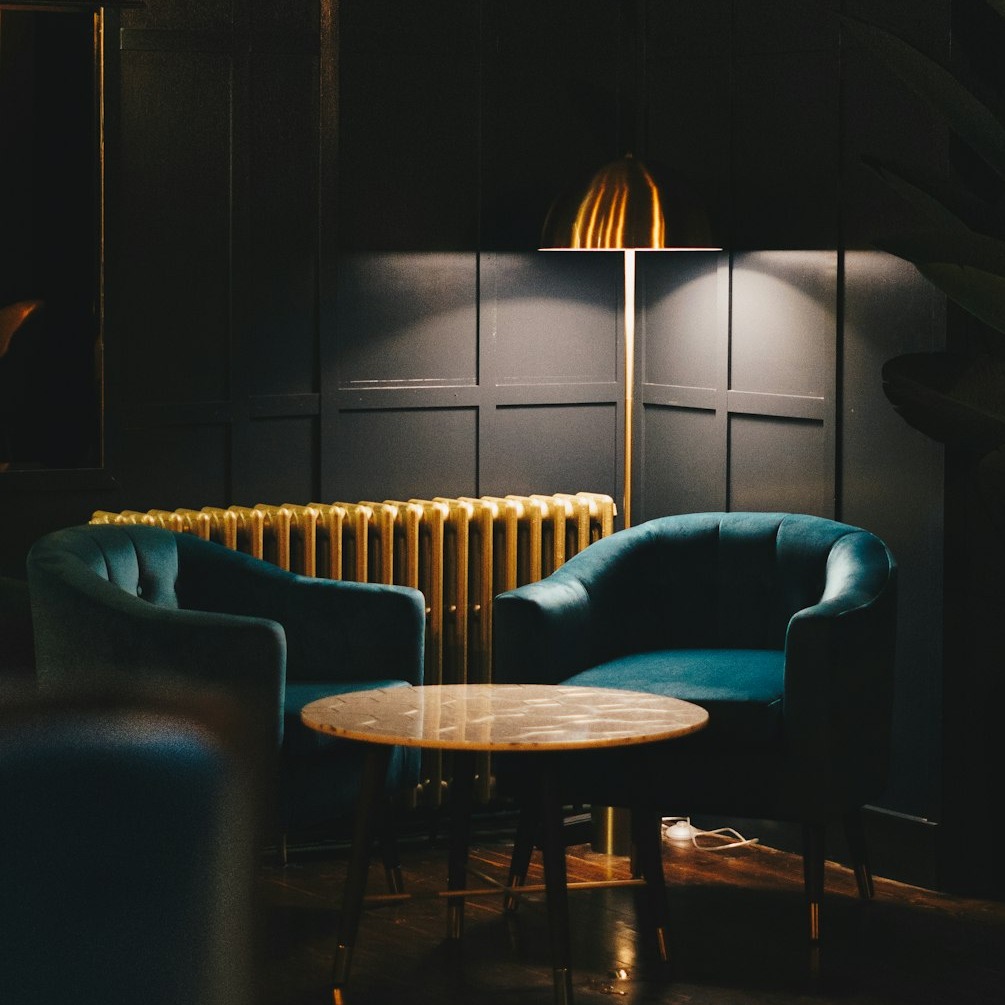
The bar called itself a lounge, which in this city meant leather and low light and a bartender who moved like he’d been poured into the position rather than hired for it, slow and deliberate and slightly too attentive in the way of people paid to notice things. Sara settled onto the barstool she’d identified from the doorway as optimal and ordered something mezcal-adjacent because she’d read once that mezcal was good for sustained patience, which she may have invented, and positioned herself with the studied casualness of a woman who absolutely had somewhere else to be and was simply choosing not to go there.
She had nowhere else to be. It was Tuesday.
“You’re going to pull a muscle,” said a voice to her left.
The woman on the adjacent barstool had the patient expression of someone who’d seen a great many human beings do a great many human things and had arrived, over time, at a kind of fond philosophical acceptance of all of it. She was striking in the way certain people were striking before you could articulate why — something about the precision of her, the arrangement of the face, like a portrait that had stepped sideways into three dimensions and wasn’t entirely committed to staying there. Dark hair. Good jaw. A blazer that had not come from anywhere Sara could afford.
She was holding a glass of something so dark red it was nearly black, and she was looking at Sara with the patient clarity of someone who knew exactly what kind of evening this was.
“My neck is fine,” Sara said.
“Your neck has been at a forty-five-degree angle since you sat down. Whatever you’re watching for, it hasn’t come in yet.”
“I’m not watching for anything.”
“Mm.” The woman lifted her glass. “Then you’re very tense for no reason.”
“I’m naturally relaxed,” Sara said, which she would later identify as possibly the least true sentence she’d ever spoken aloud, including the time she told her mother she was totally handling everything.
The woman smiled. It was a good smile — lopsided, unhurried, privately entertained. She had a quality Sara couldn’t immediately name, a stillness that wasn’t blankness, like she simply didn’t burn energy the way people usually did. She wasn’t fidgeting. She wasn’t checking her phone. She wasn’t doing any of the small combustive things humans did to fill silence with proof of life. She was just there, fully and without apparent effort, like furniture that had decided to have opinions.
“I’m Abigail,” she said.
“Sara.”
“Sara.” She said it the way you’d say a word in a new language — testing the weight, checking if it would hold. “What are you drinking that you keep forgetting to drink?”
Sara looked at her glass. She’d taken approximately two sips in fifteen minutes. “Something smoky.”
“Mezcal.” A small approving nod. “Good choice for surveillance.”
“I’m not —” Sara stopped.
The door had opened. And there was Dani.
Dani looked exactly the same, which Sara had been hoping against hope would not be the case. She’d been holding out for some small mercy — bad posture, a regrettable haircut, the general aura of someone not thriving — but Dani came through the door laughing at something on her phone, wearing the green jacket Sara had always liked, looking like a person who had moved cleanly and efficiently into the next chapter of her life and found it perfectly acceptable. And just behind her —
Sara turned back to the bar and drank half her mezcal.
“Ah,” said Abigail.
“Don’t.”
“I didn’t say anything.”
“You made a sound.”
“I acknowledged a development. That’s different.” She set her glass down. “Recent?”
“Four months.”
“And you’re here because —”
“I have a theory,” Sara said, with the conviction of someone who’d spent four months refining a deeply flawed argument, “that seeing the person — putting an actual face to the — it creates closure. Neurologically. It’s a known thing.”
Abigail’s expression was gentle and completely, compassionately unconvinced. “That’s not what closure looks like.”
“You don’t know what closure looks like.”
“I know what this looks like.” She tilted her head very slightly toward the corner booth, where Dani had just slid in across from a woman who had the unruffled energy of someone not conducting covert operations on a Tuesday night. “It looks like you maintaining a very active lease on property you told yourself you’d vacated.”
Sara looked at her. “Real estate.”
“I’m old,” Abigail said, with a funny precision that Sara registered and then let go because Dani was doing the thing with her hands — the story-telling gesture, the one that meant she was performing something she was proud of — and the woman across from her was leaning in, that specific lean, the one that meant get closer to the source, and Sara recognized it because she had been that lean once.
She turned back to her glass.
“How old?” she said, because it was something to say.
“Older than this bar,” Abigail said.
“This bar’s been here since the seventies.”
“Yes,” Abigail said, and waited while Sara did nothing useful with that.
The next hour operated as follows: Dani’s date leaned in periodically and Sara felt it each time like a key finding a lock. Abigail made a dry observation about the couple at the far end of the bar who were clearly on a first date and clearly both lying about their careers — “She’s not in finance,” Abigail said, with quiet certainty, “and he is definitely not in consulting“ — and Sara laughed, genuinely, for the first time since she’d arrived, which surprised her enough that she forgot to watch the booth for several minutes and had to consciously recalibrate.
Abigail did not perform. This was the thing Sara kept noticing and couldn’t quite categorize. She didn’t manufacture reasons for contact. She didn’t lean in or angle herself to be looked at. She existed beside Sara the way certain things existed — rivers, and old stone, and other things that had been somewhere for a long time and didn’t require acknowledgment of the fact — and somehow Sara found herself turned toward her by increments, the way a plant did something embarrassing in the direction of available light.
“She used to make me feel like the most interesting room she’d ever walked into,” Sara said, at some point, looking at her glass. “And then she left.”
Abigail was quiet for a moment. Then: “People do that. They find rooms that interest them and leave them and find other ones. It’s not a verdict on the room.”
“That’s either the most comforting thing I’ve heard in four months or you’re the strangest person I’ve met in a bar.”
“Both,” Abigail said, “are probably accurate.”
Sara smiled, and it was the first smile of the evening that didn’t have something apologetic underneath it. She lifted two fingers toward the bartender, and was mildly interested to see him glance, briefly but distinctly, at Abigail first. Not for permission, exactly — more like confirmation. The specific check-in of someone reporting to a hierarchy.
She filed it next to several other things she’d filed away and not yet opened.
“Do you come here often,” Sara said, “and I’m fully aware that sentence just happened.”
“Every night,” Abigail said, with an odd specificity. “More or less.”
“You must live close.”
“You could say that.” She let her gaze move around the bar in a way that was — proprietary wasn’t quite the word. Intimate. The way you looked at something your hands had built. “I know every corner of it.”
Sara looked at the corner booth. Looked at the bar. Looked at the bartender who moved like he’d been poured and not hired and who had just checked with the woman beside her before refilling anyone’s glass.
“You own it,” Sara said.
It wasn’t a question. Abigail looked at her with something that moved briefly through her face — a pleased surprise, the expression of someone who hadn’t expected to be seen and found they didn’t particularly mind it.
“Since 1987,” she said.
“You’d have been —”
“I know.”
“That doesn’t —”
“I know,” Abigail said, and smiled, and let it rest there in the warm bar air.
Sara looked at the rings on her fingers. Old rings — not vintage-shop old, but actually old, the kind of old that was in the metal, worn down and smoothed by decades of contact with a hand that had stayed the same. She thought: 1987. She thought: older than this bar. She thought: the glass she’s been nursing for two hours hasn’t gone down. She thought a number of things that were arranging themselves into a shape she wasn’t quite looking at directly, the way you didn’t look directly at something in your peripheral vision because you weren’t sure yet if it was real.
Then Dani and her date were standing up.
Sara watched them gather their coats. Watched Dani pause in the doorway to say something that made her date laugh, take her hand. Watched the door close behind them with the specific finality of a chapter ending somewhere in the middle of a story rather than at the back of the book, and held the feeling she’d driven forty minutes across town and taken a barstool at precisely the right angle to find.
It was not clarifying. It was just — over. The way things were over when you’d already known they were over but hadn’t yet convinced your body to believe it. Four months, and standing here in a bar she’d picked because it was Dani’s, watching Dani leave with someone else, the only thing she could think was that she was tired of standing in rooms that belonged to someone who wasn’t coming back.
She let out a breath she’d been keeping since March.
“Okay,” she said.
“Okay,” Abigail said quietly, and didn’t ask her to explain it.
They talked. This was the truest and also least sufficient thing Sara could say about what followed. They talked, and the talking had no gaps in it that panicked her, no silences that required emergency filling, no sense that she was performing adequately at conversation. Abigail asked questions the way certain people did — not prying, more like unlocking, finding the specific entry point and turning carefully — and Sara found herself handing over things she’d been carrying so long in her pockets she’d forgotten their weight: the way she’d been small in that relationship before she understood she’d been made small. The version of herself she was still in the process of locating. The email password, which she confessed somewhere around the third drink and which made Abigail laugh — a real laugh, low and unguarded, briefly private, the best sound Sara had heard in some months.
“I’m not proud of it,” Sara said.
“You’re human,” Abigail said, and there was something in the phrasing that Sara noticed without knowing what to do with, like a door she’d walked past and thought she’d heard something behind.
“I should go,” Sara said, at some point.
“You could,” Abigail agreed.
Neither of them moved.
The space between them had been doing something incremental all evening — a slow, wordless negotiation they’d been simultaneously conducting and pretending not to conduct. Sara was close enough now to be aware of the specific quality of Abigail’s attention, the way it was entirely and without remainder on her, and she understood, in the loose thoughtful way of a third drink, that being someone’s complete attention was the thing she’d missed most and not known how to name.
“I don’t do this,” Sara said.
“I know.”
“I came here to look at my ex.”
“I was present for that, yes.”
“This is —” Sara gestured at the general situation. “I don’t have a category.”
“You don’t need one,” Abigail said, “tonight.”
And she kissed her.
Or Sara kissed her — the mechanics would remain genuinely unclear. Only that the distance between them resolved, suddenly and completely, and Abigail’s hand was at her jaw and Sara had a fistful of good blazer and it was —
It was not what she expected.
It was good. Comprehensively, reorganizingly good, the kind of good that retroactively recategorized things she’d previously considered good as fine. But there was a moment, brief and strange and occupying a sensation she didn’t immediately have language for, where Sara’s lip caught on something sharp, and her brain presented her with a question she didn’t have an answer to, and she pulled back a half-inch and looked at Abigail with the focused attention of someone doing emergency inventory.
The bar’s age. The untouched glass. The rings. 1987. The bartender who checked in before acting. The extraordinary stillness. The way she’d said you’re human like she was making a specific and bounded observation about one category of thing.
The specific sharpness her lip had just found.
Sara looked at her mouth.
“Oh,” she said.
Abigail went still.
“You’re —”
“Yes.”
“Like — you’re actually —”
“Yes,” Abigail said.
Sara sat with this for a moment. She had thoughts about this, the way everyone had thoughts about this, and those thoughts involved stone architecture and a great deal of velvet and a personality made entirely of predator, nothing underneath but hunger wearing a face. She had not imagined this. A woman in a good blazer who owned a bar and used economic metaphors and laughed at the email password story and had spent three hours sitting beside a stranger who was making a mess of a Tuesday because she found it, genuinely, worth sitting next to.
The fear she’d assembled in advance did not arrive. Something else came instead — curious, warm, moving through her the way mezcal did, slow and specific.
“Is there a technique?” Sara said.
Abigail blinked. Slowly. And then, helplessly, she smiled, and it was the lopsided one, the privately delighted one, and Sara felt it somewhere foundational. “I’m sorry?”
“I’m not — I’m just asking practically. I don’t want to —” Sara made a gesture that encompassed the situation. “I’d like to not make it weird.”
“You’re asking me,” Abigail said, with great composure, “for technique notes.”
“I’m asking if there are logistics.“
“There are,” Abigail said, “minor logistics.”
“Okay.” Sara nodded. “So I just —”
“It’s a small adjustment. I’ll lead.”
“Okay,” Sara said.
She kissed her again. More carefully, which lasted approximately four seconds before careful stopped being relevant, because Abigail tilted her jaw by some precise and practiced degree and then everything worked, and then everything worked considerably, and when Sara eventually surfaced she was gripping the blazer with both hands and had lost a material amount of time.
“Okay,” Sara said, breathing.
“Okay,” Abigail agreed, with the composure of someone with better oxygen management, though her eyes were darker than they’d been and she had not let go of Sara’s face.
The bar was empty. The bartender had vanished with the professional discretion of someone who had been employed long enough to know when to disappear. One lamp burned over the door. The whole place had gone quiet and close and specific, the way rooms did when they became the only room, and Sara was aware of Abigail’s thumb against her jaw and the smell of old wood and something warm she couldn’t name and the city doing its city things outside the dark windows.
“I have an office,” Abigail said. “In the back.”
“Of your bar.”
“Of my bar.” A small pause. “It has a couch.”
Sara looked at her — the jaw, the eyes, the agelessness she understood now was a literal condition rather than a compliment, the rings on the hands of someone who had held a great many things for a very long time and was currently, specifically, holding her face — and thought about rooms. About leaving them. About people who found a room and stayed.
“Show me,” Sara said.
The office was warm and worn-in the way of rooms that were actually lived in rather than designed to look like it — two full walls of books that had clearly been read and not arranged, a desk with the topography of long and genuine use, a leather couch that had been sat on by decades. There were objects on the shelves that were simply old, the lowercase kind, the kind you could feel when you looked at them. Sara looked at them for a moment and then stopped, because Abigail was taking off the blazer, and that was more immediately relevant.
The logistics, it turned out, were modest. Largely a matter of spatial awareness, a small ongoing calibration — and then the calibration became instinct, and instinct became something she stopped thinking about because thinking about it was beside the point. Abigail was careful, and then less careful when Sara made it clear that careful wasn’t required, and Sara found somewhere in the warmth and the low light of the office of a bar that had been here since the seventies that what she’d been missing wasn’t Dani specifically but this — being someone’s complete attention, being wanted with intention, being a room that someone was choosing to stay in.
At some point Sara was on the couch. Later she was on the desk, which she would have predicted she’d have thoughts about and found she didn’t. At no point did anything feel like a castle or a cape or any of the stories. It felt like a woman with all the time in the world making a deliberate choice about how to spend some portion of it, which was, Sara thought distantly, the specific and targeted most attractive thing she’d ever encountered.
Afterward Abigail tucked Sara against her side on the narrow couch without ceremony, the way you did a thing you’d done before, the easy unconscious way, and Sara lay in the warm dark listening for the heartbeat she now understood wasn’t there and found the silence of it — restful. She was going to have questions in the morning. She was going to have a complicated week, probably, and would need to have some kind of internal reckoning about several things. She was currently in absolutely no mood to care.
“I still have the email password,” Sara said, to the ceiling.
“I know.”
“I’m going to delete it.”
“I believe you.”
“I mean it this time. There’s nothing — there’s no reason to keep it. It served its purpose, which was getting me here, which — I’m choosing to view as the universe’s intervention on my behalf.”
“Generous interpretation,” Abigail said.
“I’m a generous person.”
She felt rather than heard Abigail’s laugh, the low quiet of it, and turned her head to look at her profile in the low office light — the sharp jaw, the old rings, the extraordinary patience of someone who’d watched a great many Tuesdays and remained genuinely interested in how they went.
“I don’t know anything about you,” Sara said. “Anything real.”
“You know some things.”
“I know you own four bars.” She’d said this earlier, when Abigail mentioned it, and the number had made Sara laugh in a way that still felt good. “I know you’ve had since 1987 to acquire them. I know there are minor logistics I have now been briefed on.”
“You know I stayed,” Abigail said simply.
Sara was quiet for a moment. “Yeah,” she said. “I know that.”
“The rest,” Abigail said, “we have time for.”
“You have more time than I do.”
“Then I’ll be patient,” she said, with the unhurried sincerity of someone for whom this was not a platitude, “while you catch up.”
She drove Sara home at an hour that wasn’t quite morning — the city orange-lit and emptied out, the streets belonging to no one in particular, the kind of quiet that only happened on the other side of midnight when the night had finished being performative and was just being itself. Sara sat in the passenger seat with her shoes off and her head tipped against the window and watched the lights go by and thought about rooms with high ceilings and good light and what it meant to be in one.
Abigail pulled up outside her building and Sara gathered her things and turned to say goodnight and Abigail was looking at her — patient, warm, interested in that specific unhurried way — and Sara kissed her once more at the curb with the city doing its ambient city business around them, careful and then not, because she had the logistics down now, and it was still comprehensively, reorganizingly good.
“Thursday,” Abigail said.
“Thursday,” Sara confirmed.
She went up the steps without looking back, which for her, historically, was a meaningful act of personal growth. She’d looked back on Dani for four months. She could feel the pull even now, the old habit, the wanting to check.
She didn’t look back.
She smiled the whole way up the stairs, which was, she thought, probably enough.
Sometimes you need to write a woman so consumed by her terrible ex that she misses the vampire sitting right next to her for three hours. It shakes something loose. I feel better. I hope you do too.
More soon. The serious haunting resumes shortly.
— Harlo
