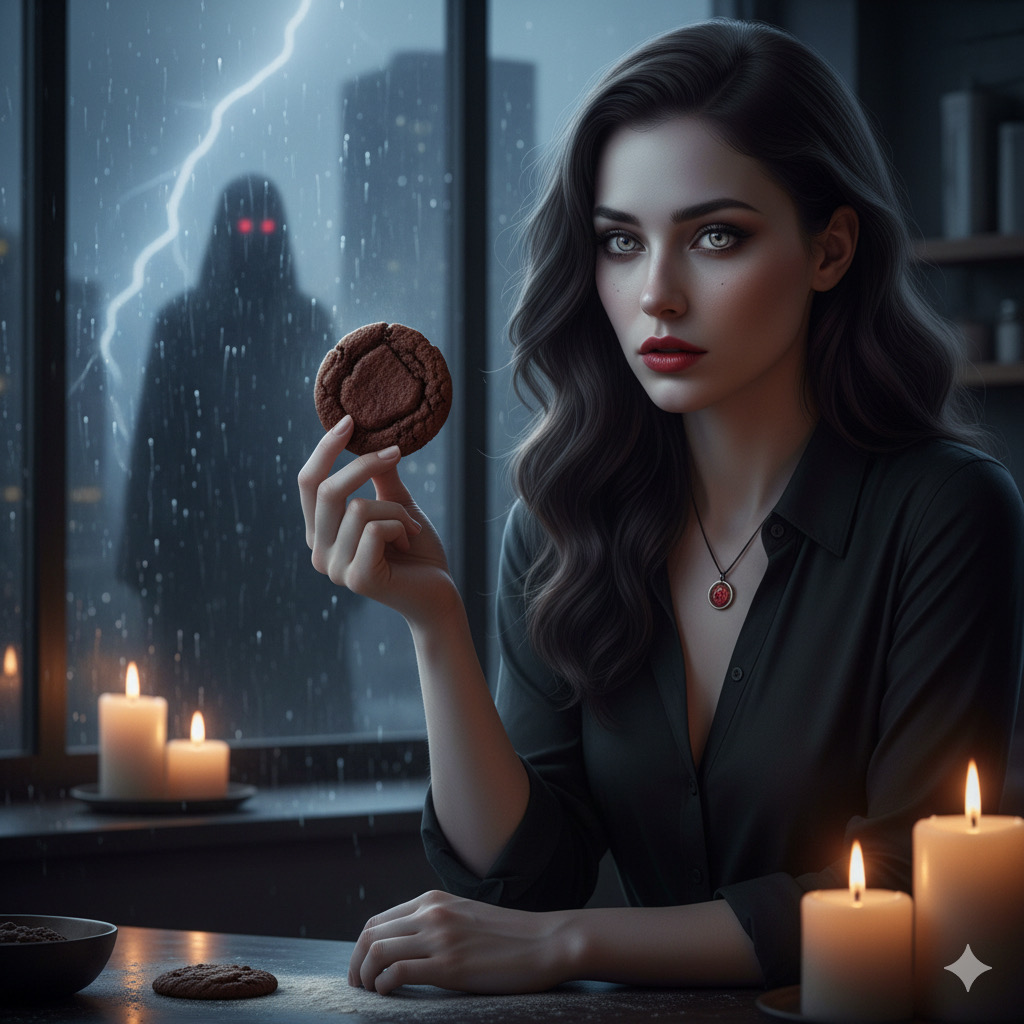
Welcome to The Writer’s Lab, where we take apart a piece of published fiction to see how the engine works. This post is for paid subscribers because it contains exclusive craft analysis.
For this month’s deep dive, we’re dissecting Chapter 7 of Haint Party. The writing challenge here was immense: we had to confirm the presence of a ghost and reveal that one of our core characters is a vampire, all while the group is already high on edibles and stressed about a storm.
The success of this scene hinged on World-Building Integration: making sure the supernatural didn’t just appear, but felt like a natural, awful invasion of a very normal reality.
Here are three key areas where we anchored the scene in reality before breaking the world wide open.
Annotation 1: The Mundane Anchor

The scene begins with extreme predictability. This is crucial. If the characters are already living in a fantasy world, a vampire won’t shock them. We need to ground them in the domestic.
The Original Text:
Dinner was delicious, as usual, and we fell into the comfortable rhythm of trying to convince Lizzie to expand her bakery menu. It was a familiar dance. We’d suggest, she’d deflect. We’d push harder, she’d change the subject. Rinse and repeat. But watching her now, I wondered if maybe Zora could break through where the rest of us had failed.
Rain hammered against the sunroom skylights, the sound amplifying as the storm intensified. “Yikes, that storm is really kicking up,” Lizzie said, expertly pivoting away from yet another speech about her culinary talents. “Are we sure it’ll clear out by morning?”
I checked my weather app, anxiety creeping up my spine. “It says it should stop around 2 am.” I tried to sound confident, but Bex would be devastated if we had to move the wedding indoors. Sure, there was a backup plan, but it wasn’t the plan, the one with the sunset and the ocean breeze and all those Pinterest-perfect details.
(Annotation: The anchor must be mundane and relational.) The first paragraph is pure relational comfort: talking about food and Lizzie’s bakery. The second paragraph introduces the storm, but immediately ties it to the wedding plan (the most normal, high-stakes element we have). By referencing a weather app and “Pinterest-perfect details,” we are emphatically telling the reader, “This is your world, this is a real wedding.” The supernatural invasion later will feel ten times more jarring because of this intense grounding in reality.
Annotation 2: Using the Environment to Facilitate the Reveal
A lazy reveal just has the monster appear. An integrated reveal uses the setting to force the characters into the situation. Here, the storm isn’t just background noise—it’s the mechanism that creates the perfect conditions for the ghost.
The Original Text:
Spencer pulled out his ever-present notebook and scribbled something before straightening the table. Then lightning cracked, really cracked, like the sky was splitting open, and thunder boomed so loud the floor trembled. The lights flickered. Being on stilts, the whole house swayed. We all froze, looking at each other with wide eyes.
“Is the house moving?” Erin squeaked, white-knuckling the counter.
…The lights flickered, died, and stayed dead this time.
In the warm glow of candlelight, you could make out a silhouette standing in the doorway. A woman. My heart stuttered. Lightning flashed, blinding us all, and when our vision cleared, the silhouette had melted back into darkness.
(Annotation: The storm is the stage crew.) The lightning cracking and the power dying does two things: 1) It creates a perfectly logical reason for the room to be pitch-dark and lit only by strobing flashes, which is the only way the ghost can appear as a “silhouette” and then vanish convincingly. 2) The physical fear of the house swaying (a detail tied to the stilt architecture) elevates the tension, making the arrival of the ghost feel like the final, inevitable thing that breaks their reality. The supernatural is not a separate event; it’s a symptom of the environment’s chaos.
Annotation 3: Integrating Vampire Lore as Character Flaw and Plot
The moment Lizzie is revealed, the information needs to feel authentic and immediate, not like an exposition dump. We tie her lore to her character flaws (hiding things) and plot solutions (the necklace).
The Original Text:
I watched my words wash over her face as she fought her instinct to snap back. The whole room held its breath, waiting.
“Well, I obviously have experience with this. Sort of…” Erin began.
“Sort of,” Lizzie echoed dryly.
…
Spencer held the kit out to Lizzie, but she raised her hands and pulled away until her back hit the wall. She retreated into darkness again.
“What are you doing?” Spencer asked, confused.
Lizzie shook her head. “I can’t.”
Zora finished the thought in a shaky breath. “The blood.”
(Annotation: Lore as Immediate Conflict.) This is the key piece of world-building here. Instead of Lizzie explaining her aversion, her reaction to Zora’s blood instantly reveals the core conflict of her vampire existence. It forces her to be honest and immediately raises the stakes of the new conflict: how can a vampire possibly survive in a crisis with the people she loves? The lore is not abstract; it’s a physical, psychological barrier right now.
The Takeaway: Grounded Fantasy
The lesson in this chapter is that Urban Fantasy succeeds when the “Urban” is just as detailed as the “Fantasy.”
Your key takeaways for World-Building Integration are:
Use Mundane Anchors: Always open your scene with highly relatable, low-fantasy details (dinner, Pinterest, weather apps) to make the subsequent supernatural events feel like a violation of the reader’s world.
Make the Environment Plot: The setting (storm, lights dying) should be the reason the monster can appear or the secret must be revealed.
Integrate Lore as Character Flaw: The rules of your world (e.g., vampires cannot be near blood) should immediately present a painful, authentic conflict for your character, not just a list of rules for the reader to learn.
Let me know if you have any questions about this breakdown! You now have a solid template for your future Monthly Annotation Posts.
